Construction
How to Frame a Wall
On this page
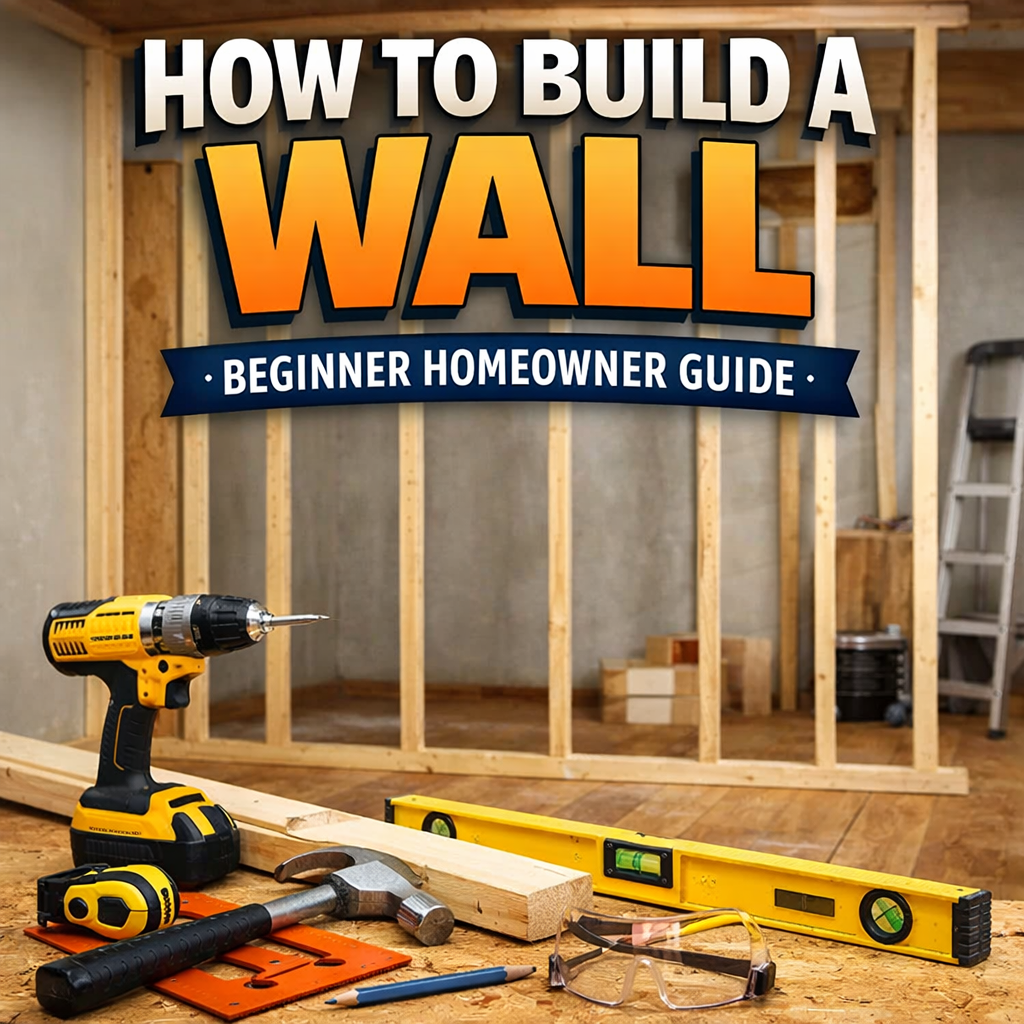
How to Frame a Wall: A Step-by-Step Guide for Beginners. Building a wall may sound intimidating, but most interior walls are straightforward framing projects that homeowners can handle with basic tools and patience.
Quick answer: This guide is for non-load-bearing interior walls only. If the wall supports a roof, floor, or another level, stop and consult a professional.
What you'll be building
- Bottom plate attached to the floor
- Top plate attached to the ceiling
- Vertical studs, usually every 16 inches
- Drywall on each side as a later step
Tools and materials
- Tape measure
- Pencil
- Level
- Drill or impact driver
- Hammer
- Stud finder
- 2x4 lumber
- Wood screws or framing nails
Step-by-step overview
- Mark the wall location. Lay out the wall line on the floor and transfer it to the ceiling.
- Cut the top and bottom plates. Cut two 2x4s to the exact wall length.
- Attach the plates. Secure the bottom plate to the floor and the top plate into the joists above.
- Measure and cut studs. Space studs every 16 inches on center and cut them consistently.
- Install the studs. Set end studs first, then fill the middle while checking for plumb.
- Add reinforcement. Add extra studs for doors, shelves, TVs, or electrical boxes.
- Check for straightness. Fix bowed or twisted studs before drywall.
Common beginner mistakes
- Not checking whether the wall is load-bearing
- Fastening only into drywall instead of framing
- Skipping layout checks at floor and ceiling
- Ignoring bowed studs before drywall
Frequently asked questions
How far apart should wall studs be?
Most interior walls use studs spaced 16 inches on center.
Can a beginner frame a wall?
For a simple non-load-bearing interior wall, many homeowners can do it with careful measuring, the right tools, and patience.